Lagos Has a Genuine Premium Venue Gap. It's Still a No Go.
Lagos scores 40 on demand and 55 on opportunity. The quality chasm is real and the corporate base is deep — and the unit economics still fail on arrival. Here's why both things are true.
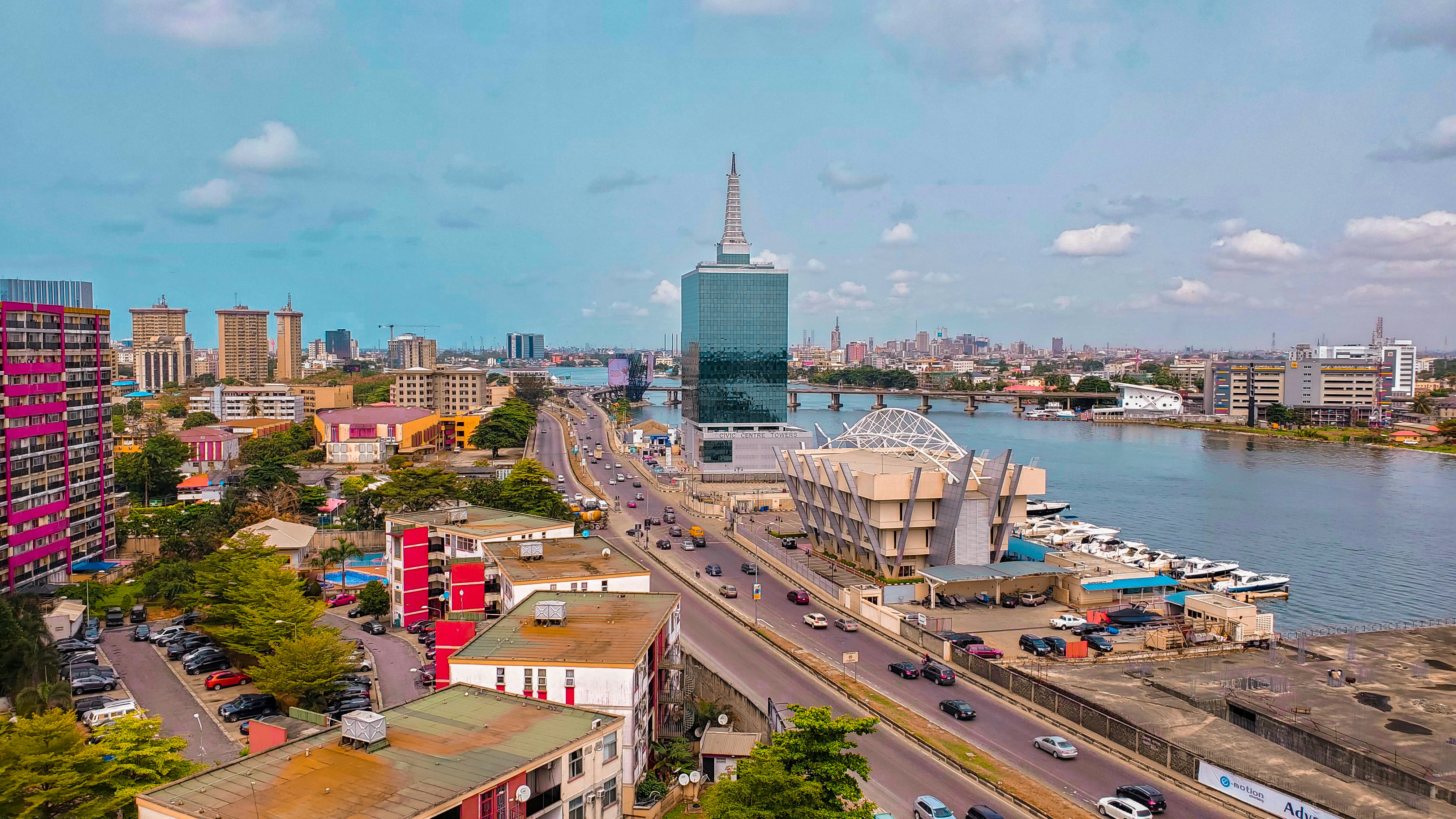
It is tempting to write about under-covered markets as if the only thing standing between them and investment is attention. Lagos is the case that breaks that framing, and it is worth publishing precisely because the answer is unwelcome.
Lagos scores 40 on demand and 55 on opportunity, with a verdict of No Go at high confidence. It also has one of the clearest quality chasms in the index. Both of those statements are true at once, and holding them together is the actual analytical work.
The gap is real — this is not a demand problem in disguise
Start with what's genuinely there. Lagos holds a deeply capitalised local corporate market, with the highest density of bank headquarters and corporate tenants in West Africa concentrated on Victoria Island. The incumbent set — the Eko Convention Centre, The Wheatbaker, Lagos Continental, Radisson Blu Anchorage, Landmark Event Centre, the Federal Palace — is hotel-led, and the venue analysis identifies two specific gaps within it:
- No standalone, ultra-premium venue for 100–300 delegates on Victoria Island.
- No reliable, tech-forward standalone venue with integrated backup power — in a market where that is a first-order requirement rather than a specification detail.
That is a textbook quality chasm, and the opportunity score of 55 reflects it. In a market like Singapore, a finding of that shape produces a Strong Go. Here it doesn't, and the reason has nothing to do with whether the demand exists.
Where the case actually dies
The demand score of 40 is not measuring an absence of corporate activity. It is measuring strong baseline demand from local banks entirely offset by severe Naira depreciation, 34.2% inflation, and the exit of major multinationals — GSK and P&G among them — which directly shrinks the pool of buyers who don't flinch at a premium rate. The corporate base is there; its ability to pay a dollar-denominated premium rate is not.
The financial model is where this stops being a judgement call:
| Metric | Lagos | For contrast — Austin |
|---|---|---|
| Breakeven occupancy | 78% | 58% |
| Target occupancy | 60% | 72% |
| Base-case payback | 8 years (bear 12) | 4.5 years |
| Est. capex, ~15k sq ft | $4m–$7m | $2.5m–$3.8m |
| EBITDA margin benchmark | 8–12% | 18–22% |
Read the first two rows together. Breakeven occupancy sits 18 points above target occupancy. Austin's sits 14 points below it. The Lagos model does not become marginal at plausible utilisation — it never crosses into profit at the occupancy the market will actually deliver. There is no operating discipline, no pricing strategy and no ramp-up curve that closes a gap of that shape.
The capex figure explains much of it: fit-out is inflated by heavily taxed imported materials and mandatory dual-generator power systems, because 24/7 off-grid diesel generation is not optional. That same diesel load is what suppresses the EBITDA benchmark to 8–12%, roughly half Austin's. A dollarised Grade A lease of $45–75/sqft compounds it — at the top of that range, above what Austin charges — while revenue accrues in a depreciating currency against a dollar-denominated return requirement.
Why this verdict is more useful than a hedge
The comfortable output here would have been Conditional Go with a note about "structuring the entry differently." That would have been wrong, and expensively so: it would have licensed a feasibility study, a partner search, and a site visit against a model that fails arithmetically before any of that begins.
Note also what the verdict is not saying. It is not a judgement about Nigeria, about African markets generally, or about the long-run trajectory of Lagos as a commercial centre. It is a statement about one venue format, at one price point, under one currency regime, at one moment. The analysis is explicit that the constraint is macroeconomic rather than structural — the case reopens if the Naira stabilises, inflation cools, and operating friction eases. Those are watchable conditions, not permanent ones.
The takeaway
A quality chasm is a necessary condition for a premium venue opportunity. It is not a sufficient one, and Lagos is the cleanest demonstration of that distinction in the index: maximum qualitative gap, negative verdict, no contradiction between them.
The discipline worth borrowing is sequencing. Demand and competitive gap tell you whether an opportunity exists in principle. Unit economics tell you whether you can own it. Run them in that order and a market like this costs you one analysis. Run them in the other order — or skip the second — and it costs considerably more.
Figures cited are from GrowSmart's cached venue analysis for Lagos, generated 20 August 2026 (data confidence: Mixed; verdict confidence: High). Lease benchmark CW Real Estate Lagos Office Market 2024. Austin comparison from its own cached analysis of 19 August 2026.
See this run on the markets you’re actually weighing.
A short live session on your shortlist — we run the engine on the call and you keep the output.
Book a demo